
Introduction
Laboratories are specialised learning environments where students and educators need organised spaces for practical activities. Unlike a conventional classroom, a laboratory requires furniture that supports a more structured working environment.
The furniture layout should provide sufficient working areas while maintaining clear movement and organisation.
Understanding Laboratory Requirements
Before selecting laboratory furniture, institutions should consider the intended use of the space.
Important considerations include:
- Available floor area
- Number of users
- Type of practical activities
- Workstation arrangement
- Movement requirements
- Storage requirements
- Cleaning and maintenance
- Overall laboratory layout
A clear understanding of these requirements helps create a more practical working environment.
The Role of Island Workstations
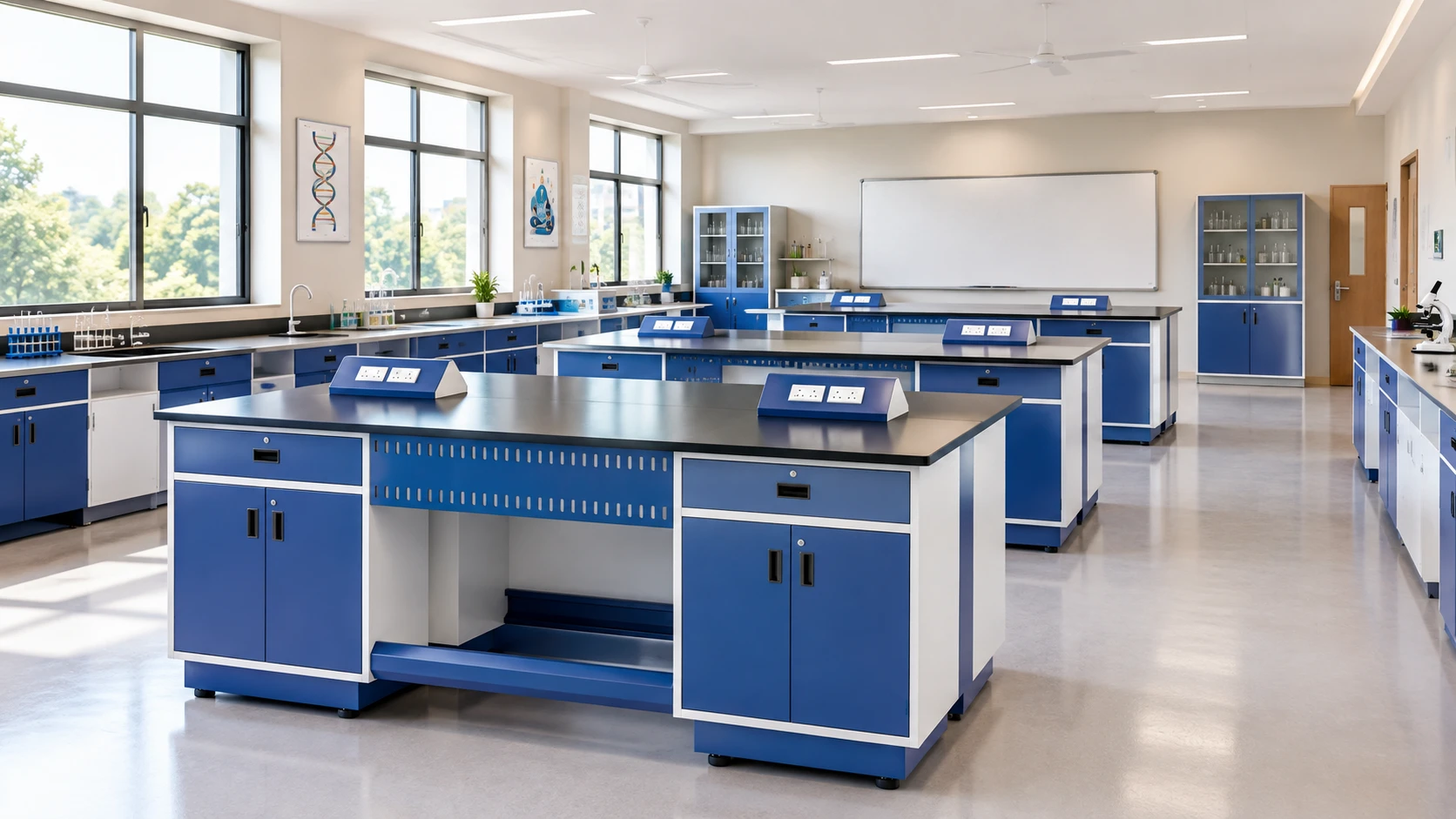
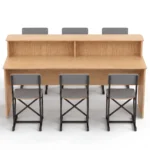
An island workstation can form an important part of a laboratory layout.
Positioned centrally within the room, an island workstation can create a shared working zone while allowing circulation around the furniture.
This type of arrangement can be considered for:
- Practical learning
- Group activities
- Demonstrations
- Laboratory-based education
- Collaborative work
Creating an Organised Laboratory
A laboratory should feel functional rather than crowded.
Furniture placement needs to maintain sufficient circulation space while ensuring that working areas are easily accessible.
The overall environment can combine:
Workstations + Storage + Teaching Area + Circulation Space
This creates a more structured laboratory environment.
Practical Furniture Planning
The furniture should be selected according to the institution’s specific requirement rather than using a standard layout for every project.
Room dimensions, quantity and intended application can influence the final arrangement.
NEW CREATIVE presents Island Workstation as part of its laboratory furniture solutions.
Designing for Educational Use
Educational laboratories need to support repeated everyday use.
A practical furniture solution should therefore consider:
- Functional working surfaces
- Organised layouts
- Easy movement
- Appropriate space planning
- Durable construction
- Simple maintenance
Conclusion
A well-planned laboratory is a combination of furniture, space and functionality. Thoughtful planning can help educational institutions create practical environments that support hands-on learning and organised activities.


Libero justo laoreet sit amet cursus sit amet dictum. Quam elementum pulvinar etiam non quam. Netus et malesuada fames ac turpis egestas maecenas pharetra convallis. Nisl suscipit adipiscing bibendum est ultricies integer quis auctor. Sem fringilla ut morbi tincidunt augue interdum velit.